Real-Time Fleet Deployment Logistics and Regional Infrastructure Intercepts
The operational logic governing rapid water disaster containment across the St. Louis, Missouri metropolitan area demands a deeply coordinated logistical infrastructure. When catastrophic plumbing failures or high-pressure commercial water line breaks manifest within complex municipal layout frameworks, local asset security drops to zero within minutes. Pressurized fluid escaping an uncontained sub-surface pipeline fracture quickly transitions from a localized mechanical issue into a severe structural emergency that actively challenges the core integrity of the building. To mitigate these rapid-onset property hazards, our centralized regional network maintains a rigorous, continuous fleet logging matrix designed to track on-duty tactical emergency response teams through real-time communication channels.
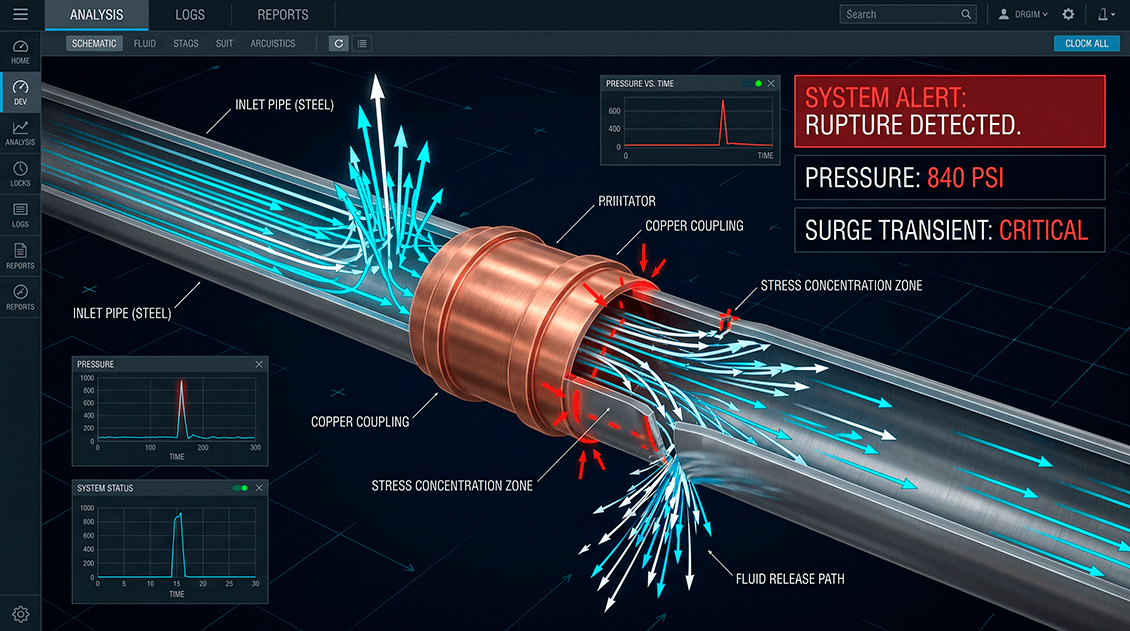
Centralized emergency fleet tracking dashboard mapping active operational units across metropolitan highway corridors.
By mapping localized utility failure zones alongside live municipal traffic patterns, the dispatch network drops standard arrival latencies significantly below typical industry response windows. Specialized vehicle units, outfitted with heavy truck-mounted vacuum extraction configurations, remain strategically positioned near critical highway hubs including the I-64, I-70, and I-270 intersections. This layout strategy ensures that when a residential basement flood or main commercial distribution line separation is reported, the nearest available emergency restoration squad can be routed instantly. Bypassing the setup delay inherent in standard portable equipment allows mitigation crews to initiate high-volume fluid evacuation immediately upon arrival, stopping moisture migration before standing liquid forces its way into porous concrete foundations or wall framing grids.
Hydrostatic Stress Monitoring and Predictive Fleet Positioning Strategies
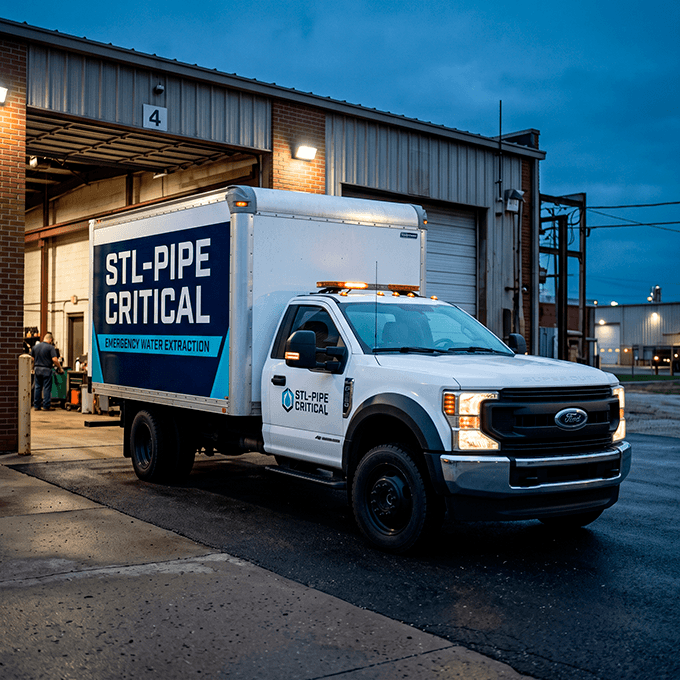
Heavy-duty technical support vehicles prepared for high-capacity structural pumping routing.
Logistical fleet optimization relies directly on analyzing the physics of modern urban water pipeline wear. Structural conduits do not split at random; their failure points are heavily influenced by predictable hydrostatic stress accumulations and sudden municipal pressure surges. When large-scale industrial valves close abruptly within the city distribution grid, a massive kinetic shockwave travels backward through regional connection lines. This water hammer phenomenon instantly multiplies internal pipeline pressures far past standard operational limits, seeking out pre-existing micro-fissures along the base of copper, galvanized steel, or vintage cast iron pipe brackets. The resulting structural breakdown produces an open, high-velocity water discharge that destabilizes sub-floor layers rapidly.
Data gathered from historical intercept records across high-risk sectors like Chesterfield, Kirkwood, Webster Groves, and Florissant indicates that older domestic plumbing layouts remain highly vulnerable to these pressure shocks. Decades of calcium scaling, chemical oxidation, and shifting ground loads degrade legacy metal joints until they reach a paper-thin thickness. When an energy surge strikes these vulnerable points, the pipe fractures completely, triggering an immediate property emergency. By deploying on-duty crews into these localized older real estate zones during high-load municipal maintenance windows, our centralized dispatch system ensures that high-capacity extraction assets are already on site before a major water line separation can saturate main interior wall spaces.
Psychrometric Incident Classification and Response Manifest Optimization
Every active plumbing intercept logged within our automated system undergoes immediate psychrometric classification to match the incoming asset profile with the proper industrial equipment payload. According to rigid IICRC S500 restoration standards, water exiting directly from a clean treated supply line begins its life cycle as a Category 1 discharge. However, this status remains highly volatile. The second that high-pressure fluid runs across industrial concrete sub-floors, runs behind drywall sheets, or mixes with dust accumulations inside dark utility voids, it immediately absorbs foreign chemicals and organic particulate matter, transforming instantly into Category 2 Gray Water.
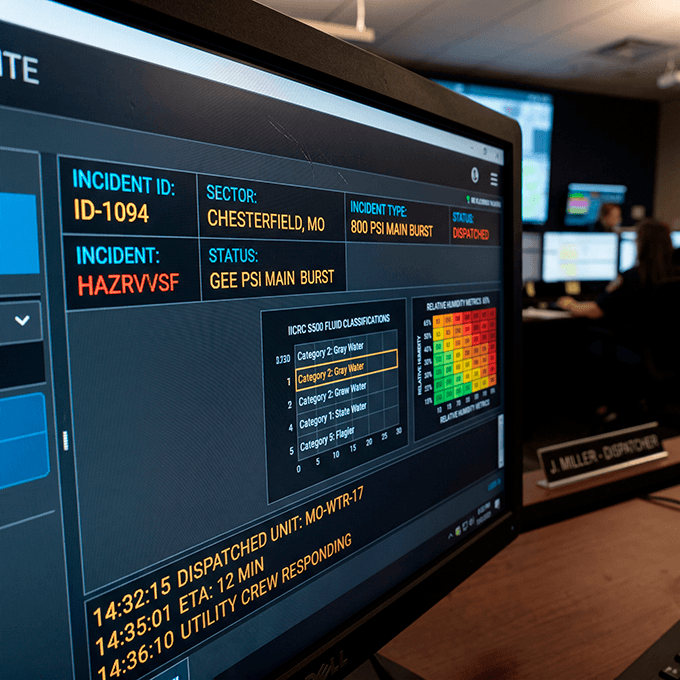
Tactical dispatch screen recording live fluid volume metrics and localized risk categories.
If the fluid extraction grid suffers a delay, and standing gray water remains unpumped for more than twenty-four to forty-eight hours, the environmental hazard level rises sharply. Microscopic mold spores, active bacterial colonies, and organic decay vectors multiply exponentially within damp building materials. This shifts the incident into a Category 3 Black Water event, presenting a serious biological hazard to building occupants. To prevent clean water from turning into a hazardous biological issue, our system automates truck routing so that crews arrive with advanced sanitization compounds and heavy-duty extraction pumps ready for immediate use. Fast response times ensure that saturated structures are stabilized before permanent wood rot or deep foundation compromises can occur.
Thermodynamic Moisture Extraction Tracking and Vapor Pressure Analytics
Once the initial high-volume liquid volume has been completely evacuated using truck-mounted structural pumping setups, the restoration process transitions into deep atmospheric moisture management. Building materials like support timbers, internal drywall sheets, and porous concrete blocks hold water deep within their grain matrices. Leaving this hidden moisture untouched ensures long-term structural failure, causing support beams to twist, warp, and lose their load-bearing capacity. To extract this deep trapped water, emergency response teams use specialized LGR (Low-Grain Refrigerant) dehumidification systems combined with heavy rows of high-velocity axial air movers.
Air movers direct targeted, high-speed air streams across damp surfaces, breaking down the stagnant boundary layer of high humidity that naturally settles over wet structural assets. Simultaneously, industrial LGR units pull the damp air across cooled internal coils, dropping air temperatures past the critical dew point to condense and pump out water vapor. This continuous loop establishes a strong vapor pressure differential between the dry room air and the saturated building core. Technicians monitor this process using digital moisture meters, documenting grain levels (GPP) until the entire property reaches verified, industry-standard dry-points that protect underlying asset values across the Midwestern basin.
Audit-Ready Digital Manifests for Insurance Settlement Processing
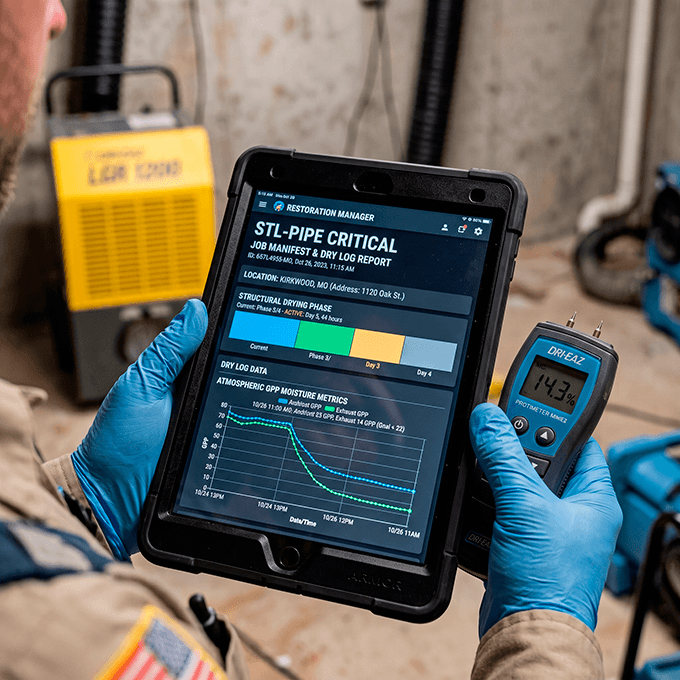
Completed digital monitoring log used to validate emergency property mitigation claims.
The final phase of any successful emergency plumbing intercept involves securing clear technical proof for subsequent insurance claim processing. Insurance providers evaluate pipe burst claims carefully, checking logs to confirm that the failure was sudden, accidental, and that the owner took immediate steps to stop the water flow and mitigate the damage. Without transparent, audit-ready field evidence detailing every step of the extraction and drying process, property owners can face serious administrative delays or reductions in claim payouts.
The independent restoration professionals in our database eliminate these hurdles by generating comprehensive digital manifest folders for every dispatch. These files compile initial thermal scans, daily moisture tracking charts, equipment run logs, and final dryness verifications into a single, cohesive proof chain. Providing this thorough documentation simplifies the review process, assisting property owners in validating their claims and securing fair, timely payouts from their insurance providers without processing delays. This complete system protects both the physical building and your financial interests from the impact of sudden line ruptures.