The Chemistry of Metallurgical Decay and Galvanic Pipe Wall Thinning
The long-term structural integrity of subterranean plumbing frameworks throughout older St. Louis, Missouri residential and commercial real estate sectors faces constant pressure from chemical decay. Properties built during the mid-20th century depend heavily on galvanized steel, copper alloys, or unlined cast-iron utility grids. Over decades of continuous exposure to varying water chemistry, municipal dissolved oxygen levels, and fluctuating mineral compounds, these metal conduits undergo localized oxidation. This chemical reaction breaks down the pipe walls from the inside out, replacing smooth, durable metal with brittle iron oxide scaling and severe rust pockets.
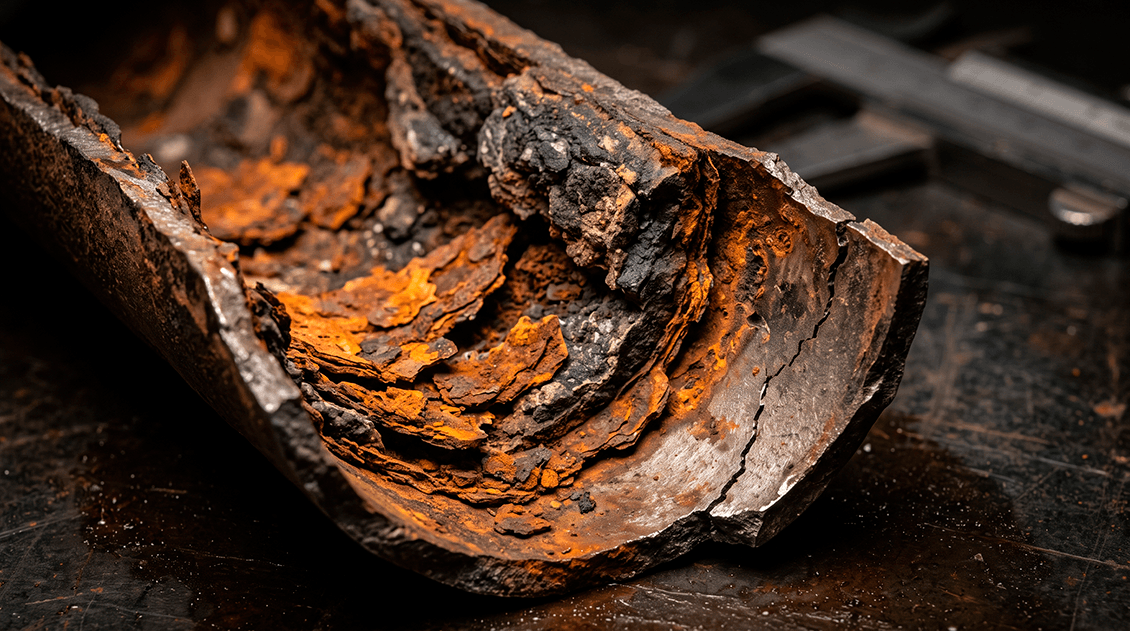
Interior view of localized oxidation and pit corrosion reducing metal pipeline load tolerances until structural failure occurs.
This internal degradation process is often accelerated by galvanic corrosion. This electro-chemical reaction occurs when different metals, such as copper supply lines and galvanized iron fittings, connect directly without proper insulating hardware. Small electrical currents flow between the materials, rapidly wicking away zinc coatings and leaving raw iron structures completely exposed to water flow. As iron layers dissolve into the stream, the pipe walls thin to a fragile, paper-thin state. When municipal systems deliver standard pressure loads, these weakened areas fail instantly, shattering brittle fittings and releasing high-capacity floods into residential foundation profiles.
Logistical Pumping Defenses Against Aging Infrastructure Failures
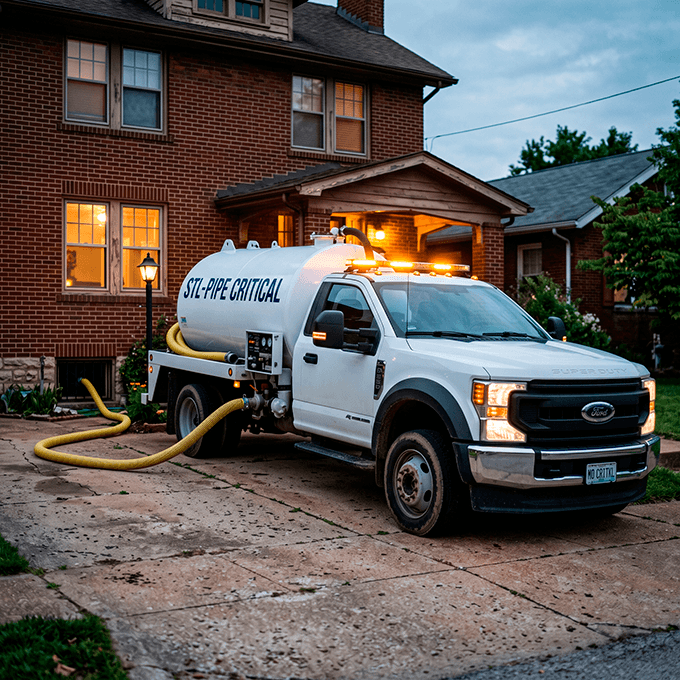
Professional vacuum tank equipment routing heavy-duty suction lines directly into a subterranean residential foundation window grid.
When an aged iron or copper main line shatters due to internal rust scaling, the resulting water flow can quickly threaten structural property layers. Thousands of gallons of pressurized water can fill a basement layout or sub-floor crawlspace within minutes of a burst. Managing these sudden, heavy fluid accumulations requires a fast, coordinated logistical response. Our central intake desk uses automated asset routing to connect property owners with independent response units stationed near major St. Louis transportation corridors, including the I-64, I-70, and I-270 highway grids.
On-duty teams respond directly to impacted properties in Chesterfield, Kirkwood, Florissant, and Webster Groves using heavy-duty Ford F-550 Super Duty vacuum tank trucks. These vehicles carry large cylindrical steel storage vessels and high-capacity positive-displacement air pumps that maintain reliable suction over long distances. Technicians deploy a single thick, reinforced yellow industrial suction hose straight from the truck's rear manifold valves, across the concrete driveway, and down through a low basement window grid. This high-lift system pumps out hundreds of gallons of wastewater per minute, lowering hydro-static pressure and preventing rising water from saturating porous building assets.
Psychrometric Hazard Progression in Corroded Line Overflows
Wastewater escaping from a shattered cast-iron drain or rusty supply line requires immediate psychrometric and biological classification under professional IICRC S500 restoration guidelines. Water exiting a broken clean supply pipe starts as Category 1 Clean Water, but changes the moment it leaves the pipe wall. As the fluid washes over rusted exterior surfaces, travels across old concrete floors, or pools inside dark utility walls, it absorbs old dust, soil compounds, and building chemical residues, transitioning immediately into Category 2 Gray Water.
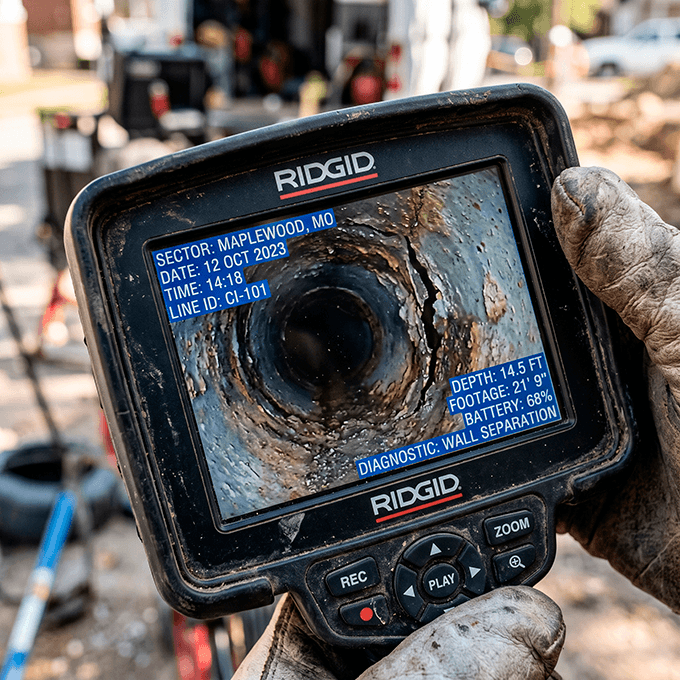
Digital endoscopic monitor tracking internal pipeline decay, material erosion, and structural hairline fractures.
If stagnant gray water sits unmitigated inside wall cavities or framing layers for more than twenty-four to forty-eight hours, the biological risk escalates significantly. The warm, damp environment triggers rapid organic decomposition, transforming the standing pool into a highly hazardous Category 3 Black Water zone filled with active bacteria and mold spores. To prevent clean water from turning into a dangerous biological threat, our dispatch system coordinates fast fleet deployments. Quick extraction allows crews to apply broad-spectrum antimicrobials across saturated structural timber framing grids, eliminating microorganisms before they can threaten indoor air quality.
Thermodynamic Moisture Evaporation and Sub-Surface Vapor Balancing
Completely restoring a property's safety profile after high-capacity vacuum pumps have cleared the bulk wastewater requires deep thermodynamic management. Structural materials like timber support plates, porous concrete floors, and internal drywall sheets absorb moisture deep into their pores through capillary action. Simply evacuating the surface water layer handles the visible issue, but leaves the underlying framework wet and vulnerable to long-term wood decay. To draw this deep moisture out, technicians set up a strict vapor pressure differential between the wet structural materials and the surrounding indoor air envelope.
Crews deploy rows of high-velocity axial air movers paired with industrial Low-Grain Refrigerant (LGR) dehumidification units throughout the impacted zones. Air movers drive high-speed air streams directly across wet masonry and timber framing, breaking down the stagnant high-humidity boundary layer and accelerating evaporation. Simultaneously, LGR dehumidifiers draw the damp air across ultra-cooled internal coils, condensing the water vapor and draining it away safely. This continuous loop drops the relative humidity and grain levels (GPP) of the indoor air, forcing trapped moisture out of porous wood and concrete block pores to stabilize the structure and protect the property's long-term asset value.
Documenting the Infrastructure Loss Proof Chain for Insurance Validation
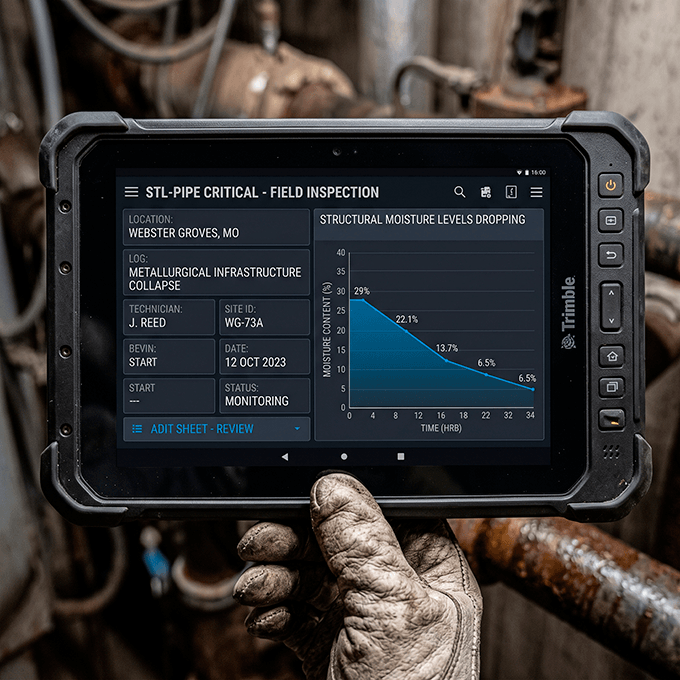
Completed digital extraction manifest and material dry log used to validate old pipe degradation claims.
Successfully navigating a large real estate insurance claim for water damage caused by old pipe degradation requires clear, technical evidence and transparent records. Insurance companies evaluate old pipe failure claims carefully, checking logs to confirm that the rupture was sudden, accidental, and that the property owner took immediate steps to stop the water flow and mitigate the damage. Without transparent, audit-ready field evidence detailing every step of the extraction and drying process, property owners can face serious administrative delays or reductions in claim payouts.
The independent restoration professionals in our database eliminate these administrative hurdles by providing comprehensive, digital manifest folders for every dispatch. These files compile initial thermal scans, daily moisture tracking charts, equipment run logs, and final dryness verifications into a single, cohesive proof chain. Providing this thorough documentation simplifies the review process, assisting property owners in validating their claims and securing fair, timely payouts from their insurance providers without processing delays. This complete system protects both the physical building and your financial interests from the impact of sudden line ruptures.